Skip to content

A VA disability appeal guide

A denial is a decision. Not necessarily the final word.

Denied or Underrated?: Build Your VA Disability Appeal

By Cameron Reed

When the VA denies service connection or assigns a disability rating that seems too low, it can be difficult to know what to do next. This VA disability appeal book provides a practical, step-by-step framework for reading the decision, identifying the disputed findings, and choosing a review path that matches the problem.

  • Build evidence around the specific proof the VA says is missing
  • Understand favorable findings, potential errors, and filing dates
  • Match the issue, evidence, rating rule, and review route
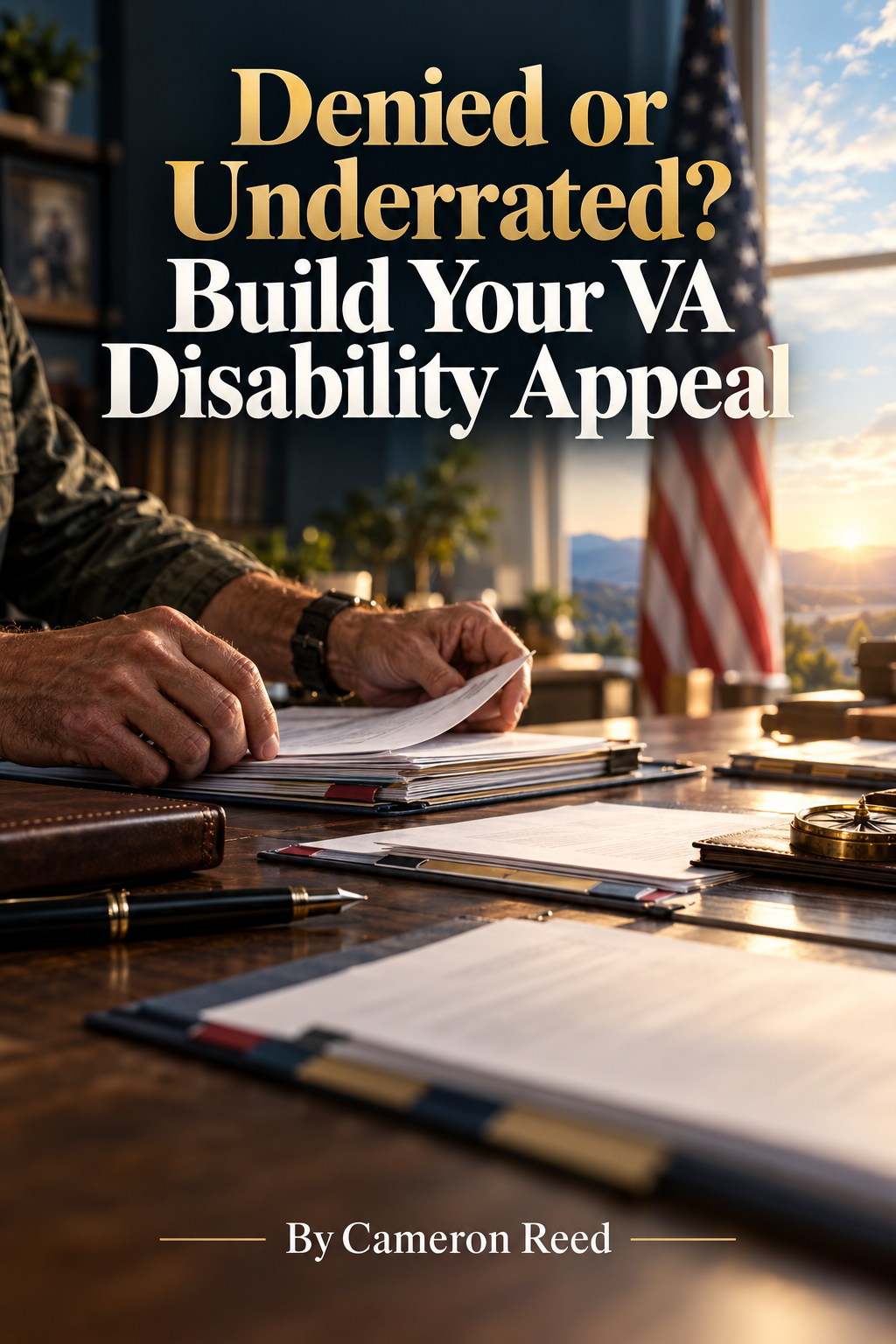
Book cover of Denied or Underrated?: Build Your VA Disability Appeal by Cameron Reed
Denied or Underrated?: Build Your VA Disability Appeal

Inside the book

What this book explores

Read the decision, not just the verdict

Break down a VA decision and locate the exact reasons for denial or underrating. The book shows how to separate what the VA accepted from the disputed findings, so you know precisely what you are responding to before you act.

When the rating seems too low

If you believe your VA disability rating is too low, the method starts with comparison: matching your documented symptoms and functional limitations against the VA rating rules that apply to your condition, rather than guessing at what should change.

VA combined ratings explained

The book covers the VA Combined Ratings Chart and explains why percentages are not simply added, so a combined rating that looks wrong at first glance can be checked against how the math actually works.

Build evidence around the missing proof

Instead of reacting with a pile of unrelated records, you learn how to develop credible medical, service, and lay evidence around the specific elements the VA says are missing, and how the new and relevant evidence standard fits a Supplemental Claim.

Prepare for the C&P exam

A compensation and pension exam matters. The guide explains how to prepare for it and how to review the resulting report as part of your overall evidence picture.

Choose the review path that fits

Supplemental Claim vs Higher-Level Review vs Board Appeal: the book walks through what each review option is built for, including new and relevant evidence, existing-error arguments, and Board evidence windows, so the route matches the problem.

The approach

A method, not a pile of records

The instinct after a denial is to send everything at once. This book argues for the opposite: turn confusion into a focused appeal strategy by matching the issue, the evidence, the rating rule, and the review route before you act.

The guide is deliberately practical. It breaks down decisions, explains the rules that drive them, and keeps important filing dates in view. It also covers how to evaluate accredited help while remaining informed and involved in your own case.

It does not promise a particular outcome. It gives you something more useful: a method.
Who it is for

Written for veterans, family members, and advocates

Veterans facing a denial

If service connection was denied or a rating seems too low, the framework helps you read the decision and respond to what it actually says.

Family members helping out

The process is easier to support when it is organized. The book lays out the steps so a family member can help gather evidence and keep dates straight.

Advocates and helpers

Anyone assisting with a review wants clarity and organization. The book offers a repeatable structure for connecting evidence to the criteria that matter.

Reader questions

Questions this book helps answer

What should I organize before discussing a VA disability denial with an accredited representative?

Preparation makes that conversation productive. Following the method in Denied or Underrated?, gather a private preparation sheet with the decision date, the disputed issue, the reason the VA stated, the records you already have, the information you believe is missing, and your questions for the representative. Keeping this organized yourself means the meeting can focus on strategy instead of chasing paperwork.

How do Supplemental Claims, Higher-Level Reviews, and Board Appeals differ when I have additional evidence?

The three review lanes treat evidence differently, and that difference is usually the deciding factor. Denied or Underrated? compares the options side by side, including how new and relevant evidence, existing-error arguments, and Board evidence windows work, so you can see which lane fits your situation instead of choosing one at random. The book does not prescribe a route for any individual; it gives you the framework for the decision.

What does new and relevant evidence mean in a VA Supplemental Claim?

In plain terms, it is evidence that speaks directly to the issue the VA decided against you. The book explains the standard and shows how to build evidence around the specific proof the VA says is missing, rather than resubmitting what the VA has already reviewed. It is a method for developing that evidence; it does not judge whether any particular record will be sufficient.

How can a veteran compare everyday functional limitations with VA rating criteria?

The book teaches you to lay your documented symptoms and functional limitations next to the applicable VA rating rules and ask what the criteria actually require. That comparison reveals where your evidence is strong, where it is thin, and what a medical or lay statement would need to address. It is an organizing exercise for your evidence, not an estimate of any entitlement.

Why does VA combine disability percentages instead of adding them?

The VA uses the Combined Ratings Chart rather than simple addition, which is why combined results often look lower than expected. Denied or Underrated? walks through the chart and the reasoning behind it so you can check the math on your own ratings and understand where the number comes from before deciding what to dispute.

What are favorable findings in a VA disability decision?

A decision letter typically contains findings the VA has already accepted in your favor alongside the elements still in dispute. The book explains where favorable findings fit when you read a decision and why distinguishing accepted findings from disputed elements is the first step in building a focused appeal, because your evidence should target the dispute, not re-prove what is already granted.

Which Board of Veterans’ Appeals docket permits additional evidence?

The three Board dockets handle evidence differently, and each comes with its own evidence window and trade-offs. The book covers Board evidence windows as part of choosing between a Supplemental Claim, a Higher-Level Review, and a Board Appeal, so you understand what can be added under each option before you commit to a lane.

How can I verify whether someone offering VA claim assistance is accredited?

Check accreditation through the VA’s official verification resources before sharing anything or paying anyone. Denied or Underrated? covers how to evaluate accredited help while remaining informed and involved in your own claim, and it keeps the line clear between an educational author and independently verified accreditation: this book is a guide, not a representative.

Book and author details

Denied or Underrated?: Build Your VA Disability Appeal

Book
Denied or Underrated?: Build Your VA Disability Appeal
Author
Cameron Reed
Published
October 18, 2026
Focus
A practical, step-by-step framework for VA disability appeals
Written for
Veterans, family members, and advocates

Cameron Reed writes practical guides for veterans navigating the VA review process. The book is an educational resource; for representation, work with a VA-accredited representative.

Take the next step

Turn confusion into a focused appeal strategy

If a VA decision has left you unsure what to do next, start by understanding it. Denied or Underrated?: Build Your VA Disability Appeal gives you the framework for matching the issue, the evidence, the rating rule, and the review route before you act.

Purchases happen on Amazon. This page is an independent introduction to the book.

Book cover of Denied or Underrated?: Build Your VA Disability Appeal by Cameron Reed